Showing posts with label news. Show all posts

Genius PhD student claims to be expelled from university, study data stolen

KUALA LUMPUR: Before this we often heard stories about how ideas and innovations were stolen or plagiarized from the original owners, but they were rarely highlighted.

Genius PhD student claims to be expelled from university, study data stolen


Usually the victims are those who do not know their rights from a legal point of view, while the predators are either in power or who know the weaknesses of the system to be manipulated.

A doctoral student (PhD) from Yemen claiming that he was expelled from the University of Malaya, that his research ideas and data were stolen.

Abbod Ali Mohammed Saeed, 34, is a smart young man because in 2015 he provided a solution to a transport issue that has never existed in Malaysia, which is to use the Meshlium scanner to track vehicles.


Through the police report and the Affidavit (SD) he submitted, he claimed that his system, research and PhD data were misused by two program supervisors who were believed to be using it for their personal business interests.

In early 2015, Abbod gave a proposal to the supervisor to use the Meshlium scanner in the Advance Intelligent Transportation System (AITS) and the supervisor agreed to make it a PhD topic.


"The supervisor offered me to use the project in the UM research company and we shared the patent rights according to UM rules and laws.

"However, after the study was completed in 2017, the password to access my system was suddenly changed and the supervisor informed me that the system had become the property of his company which had nothing to do with UM.

"I have reported this issue to the university management, however after that the supervisor asked me to continue the study because he claimed that it was not complete before.

"The supervisor also did not allow me to use the equipment to complete the study because he claimed it belonged to his company.

"I have complained about this matter to the university, they promised to solve this issue by extending three semesters and providing the necessary equipment but I found that no equipment is provided in the university laboratory.

"In the second semester, last April, I was surprised by a letter of sudden termination of studies, I felt mistreated, bullied, used for their benefit," he told. 


source:  https://mediavariasi.com/2022/08/penuntut-phd-genius-dakwa-dibuang-universiti-data-kajian-dicuri/


Because of climate fluctuations, nine cities are at risk of drowning under water by 2030

Several major cities are in risk of being flooded as sea levels rise throughout the planet.


It might be tough to visualize global warming accurately. How can you know it's actually occurring if you're not directly endangered by increasing sea levels, water shortages, or wildfires? It might all appear a little hazy.


That is why initiatives like Climate Central are so important. This website generates maps that indicate where areas of the world may become submerged as a result of increasing sea levels. So, if the earth continues to warm – and pollution continues unabated - which towns across the world might be submerged as early as 2030? To discover out, we examined Climate Central's most recent maps, which are based on the IPCC’s 2021 report - in other words, some of the most recent data available.

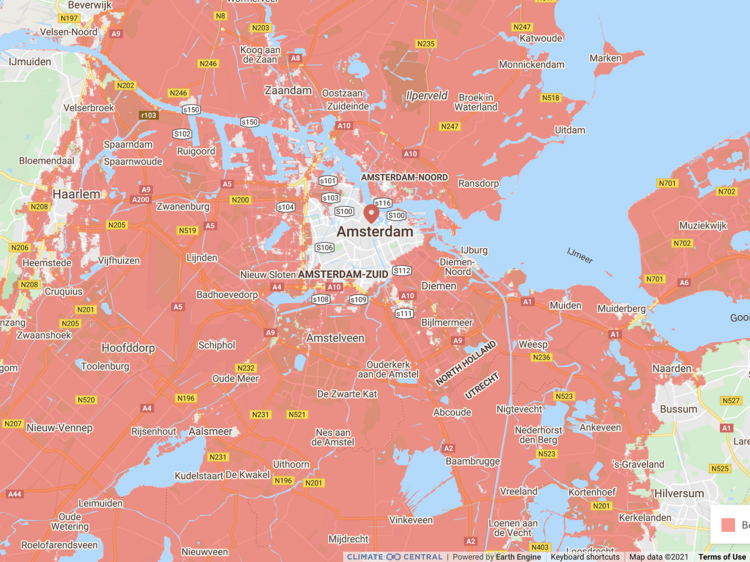
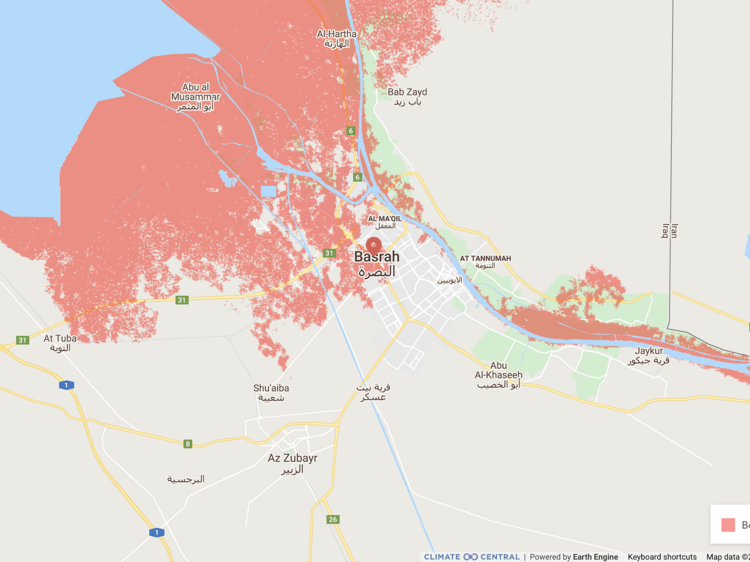
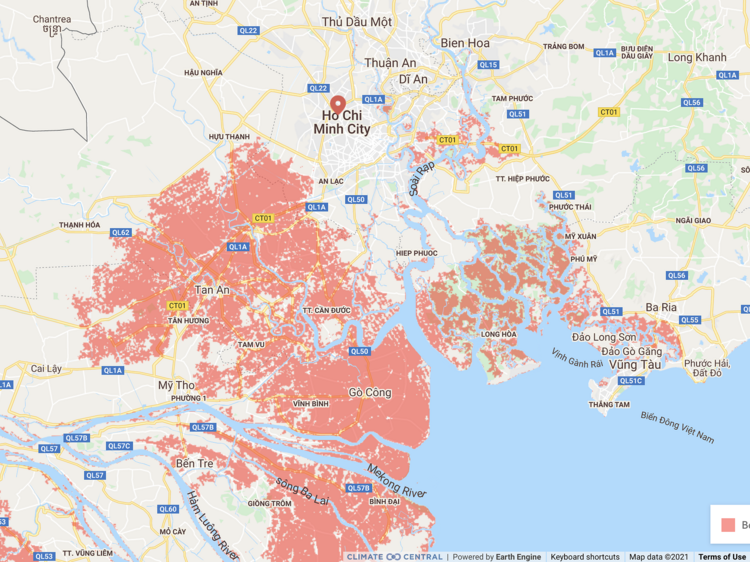
Of course, there are several factors at play, but what we're interested in is what may happen if pollution continues on its current path. These maps depict projected sea levels (in red), but they do not depict what could happen during flooding or other severe weather events.

Between now and 2030, a lot may happen. We might construct flood defenses, modify our cities, and, ideally, take substantial measures to limit global warming if the COP26 negotiations proceed as planned. But, if none of those happens, the following are the possible outcomes: Within a decade, nine cities might be completely submerged (or partially submerged).

Cities that could be underwater by 2030

Amsterdam, the Netherlands

1. Amsterdam, the Netherlands

They're named the Low Countries for a reason. The cities of Amsterdam, Rotterdam, and The Hague are low, flat, and near to the North Sea. The Dutch are known for their flood defenses, and based on these sea-level estimates, it appears that the country's dikes, dams, barriers, levees, and floodgates will become even more important in the coming years. 

Basra, Iraq


2. Basra, Iraq

Basra, Iraq's primary port city, is located on the Shatt al-Arab, a vast and broad river that flows into the Persian Gulf. Basra and its environs are particularly vulnerable to rising sea levels due to its extensive network of canals and streams, as well as nearby wetlands. As if that wasn't bad enough, Basra already has a high rate of waterborne infections, making increasing floods even more dangerous.

3. New Orleans, USA

See those broad, crisp grey boundaries surrounding the center of New Orleans on the map above? That's the city's levee system, which keeps it safe from the swarms of red buildings that come from Lake Maurepas in the north and Lake Salvador and Little Lake in the south. New Orleans would be gravely endangered by increasing water levels if those defenses were not in place, but even with them, the devastation appears to be catastrophic. The Biloxi and Jean Lafitte nature preserves appear to be particularly endangered, since they appear to be almost completely submerged on the map.

Venice, Italy

4. Venice, Italy

Venice confronts a double threat in the foreseeable future: increasing sea levels and the city itself sinking - by two millimetres every year. Climate change is likely to increase the frequency of high tides that submerge the Venetian capital, which has already been hit by servere flooding. Venice, like New Orleans, has flood-defence systems in place, but they will become more difficult (and expensive) to maintain as the problem develops.

Ho Chi Minh City, Vietnam

5. Ho Chi Minh City, Vietnam

The eastern districts of Ho Chi Minh City, notably the flat, densely built-up marshland of Th Thiêm, are the places most at danger, according to Climate Central's map. However, it appears that the city's position along the Mekong Delta will become increasingly precarious. While Ho Chi Minh City's central district is unlikely to be flooded by 2030, it will almost surely be more vulnerable to floods and tropical storms.

Kolkata, India

6. Kolkata, India

Because of its lush topography, most of west Bengal has prospered for ages, but as the map above illustrates, this has become a major source of concern in Kolkata and its environs. During the monsoon season, the metropolis, like Ho Chi Minh City, may struggle since precipitation has less ground to flow off onto. Even more alarming is this map depicting the possible situation in 2100.

Bangkok, Thailand

7. Bangkok, Thailand

According to a 2020 research, Bangkok might be the city most affected by global warming in the short future. The Thai capital is barely 1.5 metres above sea level and is falling at a considerably quicker rate than Venice (approximately two to three centimetres each year). However, Bangkok is constructed on relatively solid clay soil, making it even more vulnerable to flooding. Most of the coastal Tha Kham and Samut Prakan regions, as well as the city's principal airport, Suvarnabhumi International, might be submerged by 2030.

Georgetown, Guyana

8. Georgetown, Guyana

For decades, the capital of Guyana, Georgetown, has relied on sea walls — or, more precisely, one massive, 280-mile-long sea wall – to keep hurricanes at bay. Because the majority of the shoreline lies between 0.5 and one metre below high tide, this is the case. Guyana's coastline is home to 90% of the country's population, and as you can see, the country's sea wall will need to be significantly strengthened if Georgetown's core sections are to avoid major damage.

Savannah, USA

9. Savannah, USA

Savannah, Georgia, is located in a hurricane hotspot, yet the historic city might be eaten up by the sea on all sides even if no catastrophic weather events occur. The Savannah River to the north and the Ogeechee River to the south might potentially pour into surrounding wetlands, making the effects of storms and flash floods even more severe (by 2050, the city is expected to face once-in-a-century historical flood levels every year).

A new study suggests that covid toes are caused by an immune system response.


Doctors were perplexed by a rush of patients, primarily teens and young adults, who came in complaining of chilblains — painful sores on their toes and occasionally on their fingers, shortly after the epidemic broke out last year.


A new study suggests that covid toes are caused by an immune system response.

Covid toes was the name given to the ailment. Even though majority of the patients tested negative for coronavirus, they were viewed as yet another unusual telltale indication of the disease, alongside the loss of smell and taste. Physicians were stumped when it came to explaining the link.

White individuals have red or purple lesions, whereas people of color have purplish or brownish lesions. They create unpleasant burning or itching sensations, making it difficult for patients to walk or wear shoes.

Now, a recent French research published in the British Journal of Dermatology offers some insight on the origins of Covid toes. According to the findings, the lesions might be a result of the immune system going into overdrive in reaction to the virus, causing harm to cells and tissues in the process.

Blood samples and skin biopsies from 50 individuals who developed chilblainlike lesions for the first time in April 2020 and were referred to St.-Louis Hospital in Paris were studied by the French researchers.

Other symptoms indicative with Covid-19, including as coughing, shortness of breath, and loss of smell, were present in slightly more than half of the patients, but all of them tested negative for the virus on PCR testing.  Type 1 interferon, a protein that activates the body's immune system to combat infections but may potentially inflict harm, was found in significant concentrations in the samples. The researchers also discovered high amounts of an antibody that might target the body's own cells unintentionally.

The study shows that abnormal alterations in the linings of blood vessels may potentially play a role in the lesions. 

The authors noted that while the link between coronavirus infection and chilblainlike lesions "remains contentious," "peaks of chilblainlike lesions contemporaneous with peaks of Covid-19 fatalities in 2020 clearly imply that this condition is closely connected to SARS-CoV-2 infection."    

The origin of Covid toes is not surprising; one of the disease's characteristic symptoms is an immune system overreaction known as a cytokine storm, which may end up causing more sickness than the virus itself.

source: https://onlinelibrary.wiley.com/doi/10.1111/bjd.20707

A recente study prove that : More sleep on school days improves young people’s health-related quality of life

Many young people's health and well-being were negatively affected by the school closures in spring 2020. However, there was a good side to homeschooling: many teens reported increased health and health-related quality of life as a result of sleeping longer in the morning. As a result, the authors of the study from the University of Zurich feel that school days should start later in the morning.

A recente study prove that : More sleep on school days improves young people’s health-related quality of life

More sleep on school days improves young people’s health-related quality of life

From March 13 to June 6, 2020, the first wave of the Covid-19 epidemic forced the closure of all schools across the country. Multiple studies have found that throughout this time, young people's symptoms of sadness and anxiety rose, while their happiness and quality of life deteriorated. In addition, the students were less physically active and spent more time in front of screens.

A new research from the University of Zurich (UZH) has found that homeschooling has a favorable impact on many teens' health and well-being. "During the lockdown, pupils received around 75 minutes extra sleep every day." At the same time, their health-related quality of life increased dramatically, and their intake of alcohol and caffeine decreased," says Oskar Jenni, a UZH professor of developmental pediatrics and the study's co-leader. They were able to sleep in later because they no longer had to commute to school.

More sleep on school days enhances the health-related quality of life of young people.

During the lockdown, the researchers conducted an online poll with 3,664 high school students in the Canton of Zurich, inquiring about their sleeping habits and overall quality of life. They then compared the responses to those from a 2017 poll of 5,308 young people. The findings revealed that during the three months when schools were closed, teenagers awoke 90 minutes later on school days but only went to bed 15 minutes later on average, implying that their overall quantity of sleep rose by 75 minutes each day. On weekends, there was minimal variation in the two groups' sleep schedules.

The students in the lockdown group had a greater health-related quality of life, and they reported using less alcohol and caffeine than the students in the pre-pandemic group. "Although the lockdown definitely harmed many young people's health and well-being, our data suggest a benefit of the school closures that has gotten little attention until now," Jenni adds.

A once-in-a-lifetime opportunity to research the impact of later school start times

Sleep deprivation in teens can result in feelings of exhaustion, worry, and physical illnesses. These, in turn, have a negative impact on cognitive processes including focus, memory, and attention, making it much more difficult to operate in everyday life. The early start to the school day in Switzerland is incompatible with teenagers' normal, biologically established sleeping patterns. Many young people suffer from chronic sleep deprivation as a result of having to wake up early for school. Several cantons around the nation have lately added the issue to their political agendas.


"Our findings clearly show the value of starting school later in the morning so that children may get more sleep," Jenni explains. He believes that if the pandemic had not had such detrimental consequences on mental health, the beneficial benefits on health and health-related quality of life would have been substantially larger.

Literature:

Joëlle N. Albrecht, Helene Werner, Noa Rieger, Natacha Widmer, Daniel Janisch, Reto Huber, Oskar G. Jenni. Association of Adolescent Sleep Duration During COVID Pandemic High School Closure – Effects of homeschooling on adolescents’ sleep and health. JAMA Network Open. 5. January 2022. DOI: 10.100/jamanetworkopen.2021.42100

Why are instances of monkeypox spreading across Europe and the United States?

The most crucial point I can make is this: don't freak out.

Yes, monkeypox is comparable to smallpox in some respects (more on that below), but it is not nearly as infectious, and we are far better at handling it now than we were just a few years ago. The following factors are thought to have contributed to its emergence:

Why are instances of monkeypox spreading across Europe and the United States?

Why are instances of monkeypox spreading across Europe and the United States?

Monkeypox is no longer as uncommon in Central and West Africa,[1] affecting a wide range of small animals, including squirrels, Gambian pouched rats (also notable for sniffing out land mines), and others. It's probable that rising population pressures and human encroachment on native bush have resulted in greater exposure.

Africa's healthcare system is overburdened. COVID-19 has muddled matters even further, and it's possible that cases, fatalities, and the impact of COVID-19 on healthcare services have been under-reported. When it comes to the basic epidemiological surveillance and management that characterizes most of Africa, stretched services perform worse.

Smallpox vaccine provides roughly 85% protection against monkeypox, but since we've eradicated smallpox, we've ceased vaccinating, resulting in an increase in the number of persons susceptible to monkeypox.

Because many individuals are acting as though the SARS-CoV-2 epidemic is gone, they are mixing more freely again, allowing monkeypox to spread.

Surprisingly, many of the persons who contracted monkeypox and disseminated it in the United Kingdom, Spain, and Portugal were gay. This does not rule out the possibility of monkeypox being spread through sexual contact. Here are some more monkeypox images:


Although monkeypox resembles smallpox in appearance, it is usually milder. Smallpox used to kill roughly 30% of those who contracted it (although there was a minor variant called alastrim where the death rate was less than one tenth of that). Monkeypox might resemble chickenpox, but it is distinguished by the presence of swollen lymph nodes. Children are more badly impacted, although there is typically no damage if they recover (unlike smallpox).

Monkeypox appears to have two variants, one that kills about 10% of people (the "Congo basin clade") and the other that is much milder, killing under 3% and likely under 1%. The new outbreaks appear to be from the "West African clade," a milder version. [3]


Unless we absolutely screw up the epidemiological management of this disease—uhh, as we mainly did with COVID-19—or this turns out to be a far more aggressive new variation, or both, the outbreaks are likely to be stopped by simple epidemiological procedures. They are, admittedly, having difficulty locating contacts in the United Kingdom. However, because the virus's R0 is believed to be less than one, it is unlikely to propagate rapidly.

Furthermore, that 3–10 percent death rate occurs in the poorest parts of Africa, where health treatment is generally inadequate. For severe situations, we now have cidofovir, albeit a major study is needed to see how well it works. JYNNEOS, a vaccination, is also available. [4] It has received FDA and EMA approval.


Tecovirimat was recently licensed by the European Medicines Agency (EMA) for use in "exceptional situations."


[5] The FDA was more enthusiastic and authorized it in 2018,[6] owing to fears about what the Russians could do next. The United States has several million doses of the medication on hand.

Perhaps we'll be able to do a large-scale trial of one of these medications for monkeypox.


But I wouldn't be concerned.

Dr Jo.

------------------------

Top image is from Monkeypox | DermNet NZ
; second is from the CDC

.

Footnotes

best job search engine; help thousands of people find a new job everyday !

Receptix is a job search engine launched in 2017 to assist candidates in finding ideal jobs and employers find suitable candidates. Millions of people all over the world are looking for jobs relevant to their skill and interest. 


Moreover, many of the employers can't find qualified candidates for their open jobs. Hence, Receptix aims to empower employment across the globe through one single platform making job search easier. It contains the database of millions of job listings and recruitments.


At Receptix, we feel proud making mutually favorable matches between employers and job seekers. We make sure that each fulfills the requirements and expectation of each other. You can have information regarding job vacancies throughout India, USA, UK, Canada & Germany on our job portal site.

best  job search engine;  help thousands of people find a new job everyday ! 

Our online job portal will help you with latest job alerts from India, USA, UK, Canada & Germany. Let us help you build your career.

We can achieve the goal of bridging the gap between job seekers & employers by deeply understanding the needs of our corporate clients and then using exclusive strategies to find the most appropriate job candidates. Receptix provides recruitment capabilities by identifying top level talent for employers looking for enthusiastic professionals globally.

Subscribe to your desired job categories and we make sure the latest opportunities are sent to your inbox every week.

Elon Musk’s vision for the internet is dangerous

Elon Musk’s vision for the internet is dangerous


Elon Musk’s vision for the internet is dangerous

Musk now faces no limit on how much of Twitter’s stock he can buy. He’ll buy as much as he needs to gain total control

The Russian people know little about Putin’s war on Ukraine because Putin has blocked their access to the truth, substituting propaganda and lies. 

 Years ago, pundits assumed the internet would open a new era of democracy, giving everyone access to the truth. But dictators like Putin and demagogues like Trump have demonstrated how naive that assumption was. 

 At least the US responded to Trump’s lies. Trump had 88 million Twitter followers before Twitter took him off its platform – just two days after the attack on the Capitol, which he provoked, in part, with his tweets. (Trump’s social media accounts were also suspended on Facebook, YouTube, Instagram, Snapchat, Twitch and TikTok.) 

 These moves were necessary to protect American democracy. But Elon Musk – the richest man in the world, with 80 million Twitter followers – wasn’t pleased. Musk tweeted that US tech companies shouldn’t be acting “as the de facto arbiter of free speech”. 

 Musk continues to tell his 80 million followers all sorts of things. I disagree with many of his positions, but ever since I posted a tweet two years ago criticizing him for how he treated his Tesla workers he has blocked me – so I can’t view or post criticisms of his tweets to his followers. 

 Seems like an odd move for someone who describes himself as a “free speech absolutist”. Musk advocates free speech but in reality it’s just about power. 

 Power compelled Musk to buy $2.64bn of Twitter stock, making him the largest individual shareholder. Last week, Twitter announced that Musk would be joining Twitter’s board of directors, prompting Musk to promise “significant improvements” in the platform. 

 Sunday evening, though, it was announced that Musk would not be joining Twitter’s board. No reason was given but it’s probably part of a bargaining kabuki dance. 

 Musk wouldn’t have plopped down $2.64bn for nothing. If he is not on Twitter’s board, he’s not bound by a “standstill” agreement in which he pledged to buy no more than 14.9% of Twitter’s stock. Musk now faces no limit on how much of Twitter’s stock he can buy. He’ll buy as much as he needs to gain total control.


  What “improvements” does Musk have in mind for Twitter? Will he use his clout over Twitter to prevent users with tens of millions of followers from blocking people who criticize them? I doubt it. 

 Will Musk use his clout to let Trump back on?

 I fear he will.  Musk has long advocated a libertarian vision of an “uncontrolled” internet. That vision is dangerous rubbish. There’s no such animal, and there never will be. 

 Someone has to decide on the algorithms in every platform – how they’re designed, how they evolve, what they reveal and what they hide. Musk has enough power and money to quietly give himself this sort of control over Twitter.

  Musk talks about freedom of speech but his real power is freedom of reach – reaching 80 million Twitter followers without accountability to anyone (including critics like me) – and enough money to buy himself a seat on Twitter’s board.  

Musk has never believed that power comes with responsibility. He’s been unperturbed when his tweets cause real suffering. During his long and storied history with Twitter he has threatened journalists and tweeted reckless things. 

 In March 2020 he tweeted that children were “essentially immune” to Covid. He has pushed cryptocurrencies that he’s invested in. When a college student started a Twitter account to track Musk’s private plane, Musk tried and failed to buy him off, before blocking him. 

 The Securities and Exchange Commission went after Musk after he tweeted that he had funding to take Tesla private, a clear violation of the law. Musk paid a fine and agreed to let lawyers vet future sensitive tweets, but he has tried to reverse this requirement. 

 He has also been openly contemptuous of the SEC, tweeting at one point that the “E” stands for “Elon’s”. (You can guess what the “S” and “C” stand for.) By the way, how does the SEC go after Musk’s ability to tweet now that he owns Twitter?  Billionaires like Musk have shown time and again they consider themselves above the law. And to a large extent, they are.  

Musk has enough wealth that legal penalties are no more than slaps on his wrist, and enough power to control one of the most important ways the public now receives news. Think about it: after years of posting tweets that skirt the law, Musk was given a seat on Twitter’s board (and is probably now negotiating for even more clout). 

 Musk says he wants to “free” the internet. But what he really aims to do is make it even less accountable than it is now, when it’s often impossible to discover who is making the decisions about how algorithms are designed, who is filling social media with lies, who’s poisoning our minds with pseudo-science and propaganda, and who’s deciding which versions of events go viral and which stay under wraps. 

 Make no mistake: this is not about freedom. It’s about power.  In Musk’s vision of Twitter and the internet, he’d be the wizard behind the curtain – projecting on the world’s screen a fake image of a brave new world empowering everyone. 

 In reality, that world would be dominated by the richest and most powerful people in the world, who wouldn’t be accountable to anyone for facts, truth, science or the common good.  That’s Musk’s dream. And Trump’s. And Putin’s. And the dream of every dictator, strongman, demagogue and modern-day robber baron on Earth. For the rest of us, it would be a brave new nightmare.  Robert Reich, a former US secretary of labor, is professor of public policy at the University of California at Berkeley and the author of Saving Capitalism: For the Many, Not the Few and The Common Good. His new book, The System: Who Rigged It, How We Fix It, is out now. He is a Guardian US columnist. His newsletter is at robertreich.substack.com 

How to find jobs in USA from any town easily?

You want to find work in the USA from India or from Australia or from wherever you live, whether you want to work online or in a company, restaurant or any business.

How to find jobs in USA from any town easily?


What is the best way to find a job in USA quickly.

 
 without having to waste time searching for work in the traditional way. Some may think that finding a job in the USA is a difficult thing, this is a misconception, there are thousands of vacancies in the USA.
 
Therefore, we suggest that you use the site indeed to search for a job in the USA.
 
Indeed, it provides thousands of jobs per day in USA  at all levels, for those with academic degrees or for people without an educational background.
 

Desert solar panels may be kept dust-free with static electricity.

Desert solar panels may be kept dust-free with static electricity. 


Solar panels' production is substantially reduced by dust, however by introducing an electric field to the panels, dust particles reject each other and disperse.

Desert solar panels might be cleaned using static electricity, saving 45 billion litres of water every year.  The Mohammed bin Rashid Al Maktoum Solar Park in the United Arab Emirates and the Desert Sunlight Solar Farm in California are two of the world's largest solar farms. These are often dusty conditions, with particles rapidly collecting on solar panels. A month's worth of dust may reduce the output of a solar panel by 40%.

  Spraying significant volumes of distilled water over the solar panels is one of the most frequent strategies to remove this dust. The procedure is pricey and unsustainable, according to Kripa Varanasi of the Massachusetts Institute of Technology, because it uses an estimated 45 billion litres of water every year only to clean solar panels. Join us for a mind-blowing celebration of experiences and ideas. From March 12 to 14, 2022, New Scientist Live is going hybrid, with a live in-person event in Manchester, UK, that you can also watch from the comfort of your own home.

“That amount could provide water for over a million people [every year],” he says.   

Varanasi and his colleagues developed a water-free method of cleaning solar panels using static electricity in the lab to assist alleviate this problem.  Ordinarily, dust does not carry electricity. When moisture in the air binds to the surface of a dust particle — a process known as adsorption – this changes. Solar panels are also protected by thin glass sheets that aren't conductors. Varanasi's team changed this by applying a 5-nanometer coating of transparent zinc oxide and aluminum on the surface of a solar panel.  After that, a metallic plate was floated over the dust-covered panel, and a 12 kilovolt electric field was applied between the plate and the panel. Both layers become electrodes, or conductors that make contact with a non-metallic component of a circuit, as a result of this.

The metal plate became negatively charged, while the solar panel and dust became positively charged. Dust particles began to resist each other as the plate moved above the panel, forcing them to disperse.  The dust particles absorbed enough moisture from the solar panel in the laboratory at roughly 30% relative humidity to entirely remove it, recovering 95% of its lost power output. According to Varanasi, even the harshest deserts have a relative humidity of approximately 30%.  "I believe that water is a valuable commodity that is undervalued," he argues. "I'm hoping that this would encourage more people to consider water concerns."

source:  Science Advances, DOI: 10.1126/sciadv.abm0078

Sci-hub's Alexandra Elbakyan responds to Nature journal

Sci-hub's

Alexandra Elbakyan responds to Nature journal

"Nature has actually contacted me for comment about accusations that Sci-Hub is a threat, here is my full response / it is clear that academic publishers care about their money, not about security of other people" Alexandra Elbakyan.
07.12.2021, 16:24 Tema Re: Nature News request for comment RE court case in India Komy Holly Else <holly.else@nature.com>

Hi Holly Else,
Pirate sites like Sci-Hub threaten the integrity of the scientific record, and the safety of university and personal data first of all, Sci-Hub is an unique website. There are NO other pirate sites like Sci-Hub' and if we talk about Library Genesis, it works in connection with Sci-Hub and has the same content. I understand that publishers are trying to belittle Sci-Hub by such wording, but let's make it clear. talking about threats, academic publishers threaten the progress of science: open communication is fundamental property of science and it makes scientific progress possible. Paywalled access prevents this and is a great threat to science.

Also the great threat is also when the whole scientific knowledge became the private property of some corporation such as Elsevier, that has full control of it.

That is a threat, and not Sci-Hub. Sci-Hub cannot threaten integrity of scientific record more than academic publishers do: Sci-Hub does not publish any articles or data by itself, but only collects and makes available those materials that were published by academic publishers.

Regarding the safety of university and personal data' that is a bunch of empty words, that sound dangerous, but have absolutely no content of evidence behind them. How exactly Sci-Hub can damage any university or a person by downloading academic papers? - Pirate sites like Sci-Hub compromise the security of libraries and higher education institutions to gain unauthorized access to scientific databases and other proprietary intellectual property, and illegally harvest journal articles and e-books - Sci-Hub uses stolen user credentials and phishing attacks to extract copyrighted journal articles illegally Do they have any actual case when Sci-Hub somehow compromised the security of any library or a person? Any person that complained about credentials that were 'stolen' from them? Or is it again, nothing more but empty accusations.

Nobody is complaining about compromised security' except academic publishers. It is touching to see, how caring they are about others. Except, that they do not care at all about millions of people who cannot access science because the do not have money. Regarding the 'illegal' part, Sci-Hub goal is to be recognized as fully legal website. Any law against knowledge is fundamentally unjust. I hope Nature will have enough honesty to publish my comments in full!